
Messages from our CEO: Kickin’ It with Kimberly
It’s essential to us that we keep you well-informed about current issues and barriers affecting people with disabilities. Our CEO, Kimberly Tissot, recognizes that you are at the heart of our efforts to promote disability rights, justice, and freedoms. Letters will be written to you, our key supporters, about the injustices we uncover and the solutions we can offer as a disability-led organization.
July 2026
Kickin’ It with Kimberly: If We Lose Integration, We Lose the Promise of America
I’ve lived as a disabled person for more than 40 years. During that time, I’ve watched America change in ways I once wasn’t sure I’d live long enough to see. Doors opened. Barriers came down. Opportunities expanded. Millions of disabled Americans gained the freedom to attend school, build careers, raise families, and live in their own communities instead of being pushed to the margins of society. It hasn’t been perfect, and discrimination still exists every day, but our country has steadily moved toward the belief that disabled people belong. For decades, our country kept moving forward. Today, for the first time in decades, I’m afraid we’re moving backward.
Not because of one law, one court case, or one budget cut, but because so many of the protections that make full participation possible are being challenged at the same time. We’ve seen legal attacks on Section 504, changes in how the Department of Justice enforces the Americans with Disabilities Act (ADA), debates about the future of special education, threats to Medicaid and home- and community-based services, and proposals to reduce federal disability programs. Each issue is different, but together they protect something simple: the ability for disabled people to live, work, learn, and participate in American life alongside everyone else.
Most Americans will never read the ADA, Section 504, or the Supreme Court’s Olmstead decision, and they shouldn’t have to. What matters isn’t memorizing the names of these laws; it’s understanding what they protect. Together, they help ensure that disabled people can attend neighborhood schools, work alongside their peers, receive healthcare, raise families, vote, travel, and live in their own homes instead of institutions. At the heart of these laws is one simple principle, and that’s that disabled people belong in our communities and not separated from them simply because they have a disability.
That principle isn’t just something I’ve read in a law book; it’s something I’ve lived. Like millions of disabled Americans, I’ve experienced inaccessible buildings, employers who doubted my abilities before they ever met me, and people who saw my disability before they saw me. Those experiences taught me that discrimination doesn’t disappear simply because a law exists. But the ADA, Section 504, and Olmstead gave me something incredibly important: the ability to push back. They reminded employers, businesses, schools, and governments that equal access isn’t about kindness or charity; it’s a civil right.
That’s why recent actions by the Department of Justice concern me. The ADA hasn’t been repealed, and the Olmstead decision still stands. However, the Department has stepped away from longstanding guidance that helped states understand their responsibility to provide services in the community rather than unnecessarily placing people in institutions. To many Americans, that may sound like an inside-the-Beltway legal debate. To disabled people, it raises real concerns about whether one of our most important civil rights will continue to be meaningfully enforced. At the same time, Section 504, our nation’s first disability civil rights law, continues to face legal challenges that could weaken protections millions of Americans rely on every day.
Last year, a prominent elected official in South Carolina told me that people with disabilities only needed access to disability programs and not to government as a whole. They even suggested we didn’t need access to agencies like the Department of Agriculture. I’ve never forgotten that conversation because it reflected a dangerous way of thinking. It suggested that disabled people exist outside of society instead of as full citizens. That idea is exactly the opposite of what the ADA and the Supreme Court’s Olmstead decision were meant to accomplish.
Nothing could be further from the truth. We are taxpayers, workers, parents, veterans, students, business owners, volunteers, neighbors, and consumers. We contribute to our communities in countless ways, and we rely on the same public services as everyone else. Agriculture itself has one of the highest rates of disability of any profession, and every American benefits from the Department of Agriculture through food safety, nutrition programs, and a stable food supply. Integration means recognizing that disabled people belong in every part of American life—not just disability-specific programs.
So, I’d ask you to imagine someone you love becoming disabled tomorrow. What kind of country would you want them to live in? One where they can go to school, work, receive healthcare, raise a family, vote, travel, and live independently? Or one where those opportunities slowly disappear because no one noticed the protections behind them were fading away?
Civil rights rarely disappear overnight. They erode one lawsuit, one policy change, one funding decision, and one enforcement decision at a time. That’s why we can’t afford to stop paying attention.
If you believe every American deserves the opportunity to live, work, and participate in their community, don’t stop at reading this article. Contact your U.S. Senators and Representative and ask them to urge the Department of Justice to withdraw its recent memorandum abandoning its longstanding Olmstead guidance and restore clear guidance supporting the ADA’s integration mandate. Strong enforcement of the ADA is essential to ensuring people with disabilities continue to have the opportunity to live, receive services, and fully participate in their communities instead of being unnecessarily segregated.
Because here’s what I hope you’ll remember: the ADA isn’t just protecting disabled people today. It’s protecting every one of us tomorrow. Disability is the one minority group that anyone can join through illness, injury, military service, cancer, or simply living long enough. These aren’t someone else’s rights. They’re America’s promise that every person belongs, and that’s a promise worth protecting.
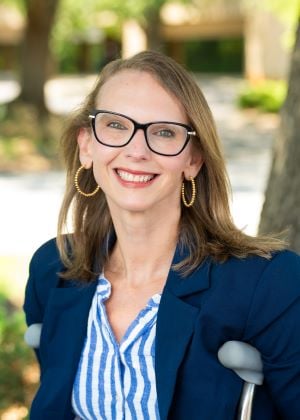
-Kimberly Tissot, Able SC CEO
Join in our advocacy by supporting our work: AllAble-SC.org.
For nearly 32 years, Able South Carolina has been a critical force for disability rights, belonging, and the right to live on one’s own terms. As a disability-led organization, we don’t just serve our community—we are the disability community. We Are All Able SC! We’re calling on allies, advocates, and community members to generously invest in disability empowerment and justice. Please invest in those most affected and impacted by policy decisions. Visit allable-sc.org today to make a donation.